kW (Kilowatt)
The rated size of a solar system. A 3 kW system can deliver up to 3 kW under suitable conditions.
Understand the terms, equipment and choices before you buy — from kW and net metering to modern panels, inverters, batteries and government subsidy.
300+
Sunny days in Trichy
≈4.5
Units per kW each day
25+ yrs
Typical panel life
≈90 sq.ft
Clear roof per kW
These six ideas make quotations, electricity bills and installer discussions much easier to understand.
The rated size of a solar system. A 3 kW system can deliver up to 3 kW under suitable conditions.
The electricity generated or consumed over time. One kWh equals one electricity unit.
The day's sunlight expressed as equivalent full-power hours. We estimate about 4.5 units per kW per day.
Panels produce DC electricity; the inverter converts it to AC electricity used by your home or business.
An approved meter records electricity imported from and exported to the grid, subject to current utility rules.
A panel's maximum rated power under standard laboratory test conditions.
The right choice starts with your goal: reduce bills, secure backup power, or achieve both.
Lowest-cost bill reduction
Solar works with the electricity grid and exports eligible surplus through net metering. Standard on-grid systems switch off during outages for safety.
Best for
Homes and businesses with a reliable grid and high daytime use.
Independent battery power
Panels charge batteries through an inverter, allowing essential loads to run where grid supply is absent or highly unreliable.
Best for
Farms, remote sites and locations without dependable grid access.
Solar + grid + backup
A hybrid inverter coordinates panels, grid and batteries. Backup duration depends on battery capacity and the appliances selected.
Best for
Properties needing both bill savings and power-cut backup.
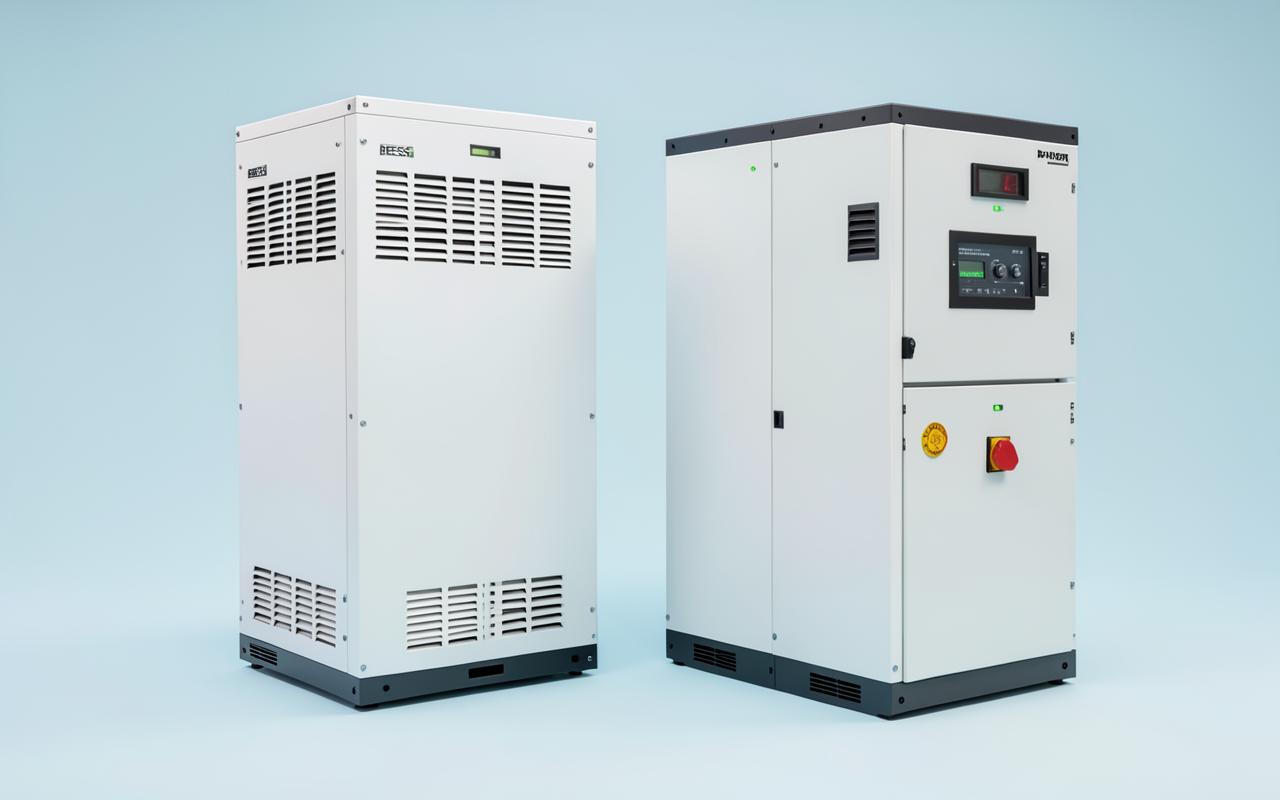
A Battery Energy Storage System stores electricity and releases it when needed. A complete BESS combines battery modules, a Battery Management System, power conversion, protection, cooling and smart controls — not just a battery cabinet.
SVN Renewable Energy designs cabinet, rack and containerised systems for commercial buildings, industries, microgrids and solar projects. Capacity is selected only after checking load, backup duration, solar surplus and available electrical infrastructure.
Keeps selected critical loads running during a grid outage, based on the battery capacity and inverter power rating.
Stores surplus daytime solar energy and supplies it later when solar production falls or evening demand rises.
Can reduce short periods of high grid demand for commercial and industrial sites when designed around measured load data.
In a properly controlled hybrid system, batteries can support loads and reduce generator runtime during outages.
Correct sizing matters
Battery capacity is measured in kWh; inverter power is measured in kW. Both must match your starting loads, running loads and required backup time. Site ventilation, fire protection, isolation and monitoring are part of the design.
Domestic Content Requirement modules use India-made solar cells and modules. Current residential subsidy projects require compliant approved equipment.
Often considered for commercial or non-subsidy projects. Eligibility, manufacturer listing and project rules must be verified before ordering.
The Approved List of Models and Manufacturers is maintained by MNRE. Applicable requirements can change, so verify the current official list for your project category.
Convert sunlight into DC electricity. Panel technology, warranty and manufacturer approval matter.
Converts DC into usable AC and manages system safety, generation and monitoring.
Stores daytime energy for later use. LiFePO₄ offers high usable capacity and long cycle life.
Secures modules at the planned orientation while protecting roof integrity and wind safety.
Isolation, surge protection, earthing and lightning protection help safeguard people and equipment.
Shows generation, faults and performance through an inverter display or connected application.
Premium technology is valuable when it solves a real site constraint. We select equipment around shade, orientation, safety, loads and budget.
High-efficiency cells with strong low-light and temperature performance. Compare product warranty and degradation terms, not efficiency alone.
Generate from front and rear surfaces. Extra yield depends on mounting height and reflected light beneath the module.
Reduce internal resistance and can improve tolerance to partial shading compared with conventional full-cell layouts.
Manage output at panel level and help on mixed-orientation or partially shaded roofs. Benefits depend on site layout.
Convert power at each panel, enabling panel-level monitoring and modular expansion without one central string inverter.
A stable lithium chemistry used for modern backup systems. Capacity must be sized to actual loads and required backup hours.
For eligible Tamil Nadu homes, the combined Central and State assistance shown here can reach ₹1,00,000. Final eligibility depends on current scheme rules and approval.
Read the complete processOur Trichy team will inspect your roof, study your electricity use and recommend the system that fits — without oversizing or sales pressure.